

Lion’s mane is the shaggy white mushroom that looks like a frozen waterfall, and it has become the most talked-about “brain” supplement on the shelf. Coffee blends, gummies and tinctures promise sharper focus, better memory and even a calmer mood. Some of that is built on real science. A lot of it is built on test-tube studies and a handful of small human trials.
We read the human research so you do not have to. Here is what lion’s mane has actually been shown to do, how much was used, who should skip it, and how to try it sensibly if you decide it is worth a go.
Lion’s mane at a glance: how strong is the evidence?
- 🧠 Memory in older adultsA few small trials: modest improvement
- 🎯 Focus and speed in young adultsOne trial: faster on one task after a single dose
- 😌 Mood and anxietySmall trials: possible benefit, needs confirming
- 🧪 Nerve growth claimsStrong in the lab and in animals, unproven in people
- ✅ SafetyWell tolerated in trials; allergy is the main risk
What lion’s mane is, and why scientists are interested
Lion’s mane (Hericium erinaceus) is an edible mushroom that grows on hardwood trees. It has been eaten as food and used in traditional Chinese and Japanese medicine for centuries, where it is known as hou tou gu and yamabushitake.
The excitement comes from two families of compounds: hericenones, found mostly in the fruiting body (the mushroom itself), and erinacines, found mostly in the mycelium (the root-like network). In cell and animal studies, both stimulate the production of nerve growth factor, a protein that helps nerve cells survive, grow and form connections. That is a genuinely interesting finding. It is also a long way from proving a supplement will make you sharper, because what happens in a petri dish or a mouse often does not carry over to people.
🧠 Memory: the small trials in older adults
The study most often quoted was run in Japan in 2009. Thirty adults aged 50 to 80 with mild cognitive impairment took either 3 grams a day of dried lion’s mane fruiting body powder or a placebo for 16 weeks. The lion’s mane group scored better on a standard cognitive test at weeks 8, 12 and 16. Four weeks after stopping, their scores slid back down.
A 2019 Japanese trial in 31 healthy adults over 50 found a similar pattern: after 12 weeks of lion’s mane fruiting body supplements, scores on a short memory and thinking screen improved compared with placebo. A 2020 pilot study in Taiwan gave 49 people with mild Alzheimer’s disease capsules of erinacine A-enriched mycelium for 49 weeks and reported better scores on some cognitive and daily-living measures than placebo.
Our read: three small trials pointing the same way is encouraging, but small. None was large enough to prove a lasting benefit, the products and doses differed, and the effect faded once people stopped taking it. Lion’s mane is not a treatment for dementia, and nobody with memory problems should use it in place of a proper medical assessment.
🎯 Focus in young, healthy adults
A 2023 Australian study tested lion’s mane in 41 healthy adults aged 18 to 45. After a single 1.8 gram dose, people were faster on one attention task (the Stroop test) about an hour later. After 28 days of daily use, there was no clear overall improvement in thinking scores, although there was a trend toward lower perceived stress.
Our read: if you are young and healthy, do not expect a noticeable “limitless” effect. Sleep, exercise and limiting distractions will do far more for your focus. Lion’s mane may give a small edge for some people, and that is about all the evidence supports for now.
😌 Mood and anxiety
In a 2010 Japanese study, 30 women ate cookies containing 2 grams of lion’s mane fruiting body or placebo cookies every day for four weeks. The lion’s mane group reported less depression and anxiety on questionnaires. A few later small studies in people with overweight or mood complaints have reported similar trends. These studies are tiny and short, so treat them as a promising lead rather than proof. If you are dealing with depression or anxiety, talk to a doctor or therapist; a mushroom supplement is not a substitute for care.
💊 The doses that were actually studied
- Memory trials in older adults: about 1 to 3 grams a day of dried fruiting body powder, taken for 12 to 16 weeks.
- Young-adult focus trial: 1.8 grams a day of a fruiting body supplement.
- Mild Alzheimer’s pilot: three 350 mg capsules a day of erinacine A-enriched mycelium.
Liquid extracts are measured differently, so they cannot be compared gram for gram with powders. If you use a liquid extract, follow the label, start at the low end, and give it at least eight weeks, because the trials that found benefits ran for two to four months.
How to choose a lion’s mane supplement
- Fruiting body or mycelium? Fruiting body products are closer to the mushroom eaten as food and match most of the memory trials. Many cheap powders are mycelium grown on grain, which can be mostly starch from the grain. The label should say which part is used.
- Look for identity testing. Mushroom products are easy to adulterate. Choose a brand that tests its raw materials.
- Pick a format you will actually take. Consistency matters more than anything. Liquid extracts are easy to add to coffee or tea; capsules suit people who dislike the taste.
- Skip the proprietary blends that hide how much lion’s mane is actually inside.
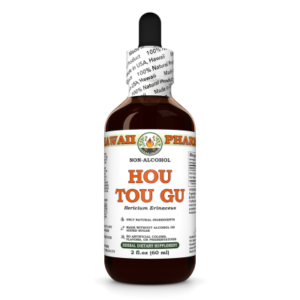
Our pick: lion's mane drops
Hawaii Pharm Lion's Mane Alcohol-Free Liquid Extract
An alcohol-free glycerite made from dried lion's mane mushroom, easy to stir into morning coffee or tea. Raw materials are identity-tested in Hawaii Pharm's own lab.
- Alcohol-free glycerite (vegetable glycerin and water)
- 2 fl oz dropper bottle, about 1 ml per serving
- Raw materials identity-tested in Hawaii Pharm's lab
Affiliate link: we may earn a commission at no extra cost to you. These statements have not been evaluated by the FDA. Not intended to diagnose, treat, cure, or prevent any disease. Full disclosure.
Who should be careful
- Anyone allergic to mushrooms or mold. Skin rashes and breathing problems have been reported in sensitive people.
- People on diabetes medication. Animal studies suggest lion’s mane may lower blood sugar, so monitor closely and tell your doctor.
- People on blood thinners or with a bleeding disorder, and anyone with surgery coming up, as lab studies hint at an effect on clotting.
- Pregnant or breastfeeding women, because there is no safety data.
In the human trials, side effects were uncommon and mild, mostly an upset stomach.
The honest bottom line
Lion’s mane is one of the more interesting brain supplements because its lab science is real and a few small human trials agree with it. The best evidence is for a modest memory benefit in older adults taking a few grams a day for several months, and it fades when you stop. For young, healthy people the effect seems small. It is a reasonable, low-risk experiment if you want to try it, as long as you keep expectations modest and keep sleep, movement and a good diet doing the heavy lifting.
Want to try lion’s mane?
Hawaii Pharm Lion’s Mane Alcohol-Free Liquid Extract: made from dried lion’s mane mushroom in vegetable glycerin and water, with no alcohol. A simple way to add it to your morning routine.
Affiliate link. We may earn a commission if you buy, at no extra cost to you. These statements have not been evaluated by the Food and Drug Administration. This product is not intended to diagnose, treat, cure, or prevent any disease.
Frequently asked questions
How long does lion’s mane take to work?
In the memory trials, differences showed up after about 8 weeks and grew by 12 to 16 weeks. One study found a small effect on attention an hour after a single dose, but most people should think in months, not days.
Can I just eat lion’s mane mushrooms?
Yes. Fresh lion’s mane is delicious pan-fried in butter or oil and has a texture a bit like crab. The trials used concentrated powders, though, so you would need to eat it often to match those amounts. Always cook wild or fresh mushrooms and buy from a trusted source.
Can I take lion’s mane with coffee?
Yes, and many people do. There is no known interaction between lion’s mane and caffeine. Just be aware that any focus boost you feel in the morning is probably mostly the coffee.
Studies and sources
- Mori K et al. (2009). Improving effects of the mushroom Yamabushitake (Hericium erinaceus) on mild cognitive impairment: a double-blind placebo-controlled clinical trial. Phytotherapy Research, via PubMed.
- Saitsu Y et al. (2019). Improvement of cognitive functions by oral intake of Hericium erinaceus. Biomedical Research, via PubMed.
- Li IC et al. (2020). Prevention of early Alzheimer’s disease by erinacine A-enriched Hericium erinaceus mycelia pilot double-blind placebo-controlled study. Frontiers in Aging Neuroscience, via PubMed.
- Docherty S et al. (2023). The acute and chronic effects of lion’s mane mushroom supplementation on cognitive function, stress and mood in young adults. Nutrients, via PubMed.
- Nagano M et al. (2010). Reduction of depression and anxiety by 4 weeks Hericium erinaceus intake. Biomedical Research, via PubMed.
- Hawaii Pharm Lion’s Mane alcohol-free extract product page. Hawaii Pharm.
This article is for general education and is not medical advice. Talk to your doctor or pharmacist before starting a supplement, especially if you take medication, are pregnant or breastfeeding, or have a health condition. These statements have not been evaluated by the Food and Drug Administration. This product is not intended to diagnose, treat, cure, or prevent any disease.


