

Ten years ago, LED light therapy meant a dermatologist’s office and a few hundred dollars a session. Now you can strap a glowing red mask to your face on the couch, and they are all over social media. The pitch is huge: more collagen, fewer wrinkles, clearer skin, all with no needles and no downtime.
Here is the thing most reviews skip: red light therapy is one of the few beauty technologies with actual controlled trials behind it. It is also oversold, and home masks are weaker than clinic panels. We went through the research, the wavelengths and the safety record, then picked the three masks we think are worth the money.
LED masks at a glance: how strong is the evidence?
- 🔴 Fine lines and wrinkles (red / near-infrared)Several controlled trials: modest, real improvement
- ✨ Skin texture and collagenTrials show more collagen density and smoother skin
- 🔵 Acne (blue light)Mixed results; low-certainty evidence
- ⏳ How fastWeeks to months of consistent use
- ⚠️ SafetyLow risk for most; eyes and light-sensitizing drugs need care
⚡ How LED light therapy works
LED masks shine specific wavelengths of light into the skin. The technical name is photobiomodulation. Red light (around 630 to 660 nm) and near-infrared light (around 810 to 850 nm) are absorbed by an enzyme in your cells’ mitochondria called cytochrome c oxidase. In lab studies this boosts cellular energy (ATP) and nudges fibroblasts, the cells that make collagen, to produce more of it. Blue light (around 415 nm) works differently: it is absorbed by compounds made by acne bacteria and damages them.
Unlike lasers, LEDs do not heat or injure the skin, which is why there is no downtime. The trade-off is that the effect is gentle and builds slowly.
🔴 Wrinkles and collagen: what the trials show
The best-known study was published in 2014. Researchers treated 136 volunteers twice a week for 30 sessions with red or broad-spectrum light, and compared them with untreated controls. The treated groups had visibly better skin complexion, less roughness and fewer fine lines, and ultrasound scans showed an increase in collagen density in the skin. A 2007 Korean trial in 76 people found that 633 nm red light, 830 nm near-infrared light, or the two combined, given twice a week for four weeks, reduced wrinkles and improved skin elasticity, with skin biopsies showing more collagen.
Our read: the evidence is real but modest. Expect softer fine lines, smoother texture and a brighter complexion after two to three months of consistent use, not a facelift. Most trials used professional panels in a clinic, which deliver more light than a wearable mask, so home results usually take longer.
🔵 Acne: blue light
Many masks add a blue light mode for breakouts. A Cochrane review of light therapies for acne found the evidence low certainty: some people improve, but results are inconsistent and usually smaller than with proven acne treatments like topical retinoids, benzoyl peroxide or prescription medication. Blue light can be a helpful add-on for mild acne. It is not a replacement for a dermatologist if acne is scarring or persistent.
🧠 What to look for in a mask
- The right wavelengths. 630 to 660 nm red and 810 to 850 nm near-infrared have the most research. Extra colors like green and yellow have very little.
- FDA clearance. “FDA cleared” means the FDA agreed the device is substantially equivalent to one already on the market and is safe for its stated use. It is not the same as FDA approval, but it is a useful baseline that many cheap masks lack.
- Fit and coverage. Light falls off fast with distance. Flexible masks that sit close to the skin deliver more of it.
- A session length you will stick with. Consistency beats everything. A 3-minute mask you use daily beats a 20-minute mask you use twice.
- A real brand and warranty. You are putting electronics on your face. Pay for engineering and support.
🏆 The 3 LED masks we would buy
| Mask | Wavelengths | Session | Best for |
|---|---|---|---|
| Dr. Dennis Gross FaceWare Pro | Red + blue | 3 minutes | Wrinkles plus breakouts, busy people |
| CurrentBody Series 2 | 633 + 830 + 1072 nm | 10 minutes | Maximum anti-aging coverage |
| CurrentBody Series 1 | 633 + 830 nm | 10 minutes | The best-studied wavelengths for less |
1. Best overall: Dr. Dennis Gross DRx SpectraLite FaceWare Pro
This is the mask we would hand to most people. It is FDA cleared, made by a dermatologist-founded brand, and offers red light for wrinkles, blue light for acne, or both at once. The killer feature is the 3-minute treatment time: it is short enough that you will actually do it every day, which is what makes LED work.
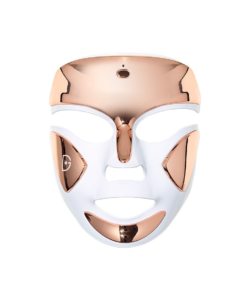
Best overall LED mask
Dr. Dennis Gross DRx SpectraLite FaceWare Pro
FDA-cleared red and blue LED mask from a dermatologist-founded brand. Three-minute sessions, so it is the one you will actually keep using.
- Red, blue or red + blue light modes
- 3-minute treatments
- FDA cleared for wrinkles and mild acne
Affiliate link: we may earn a commission at no extra cost to you. As an Amazon Associate we earn from qualifying purchases. Full disclosure. Image: Dr. Dennis Gross Skincare (official product image).
2. Most wavelengths: CurrentBody Skin LED Mask Series 2
CurrentBody’s flexible silicone masks wrap closely around the face, and Series 2 packs 236 LEDs across three wavelengths: 633 nm red, 830 nm near-infrared, and a newer deep near-infrared at 1072 nm. The red and 830 nm wavelengths are the best-studied in skin research; 1072 nm has much less evidence for facial skin so far, so think of it as a bonus rather than the reason to buy. If anti-aging is your only goal and you want the most light, this is the pick.
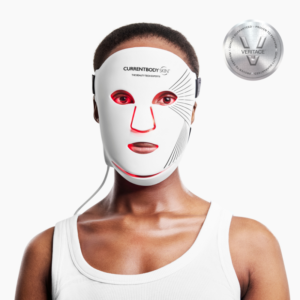
Most wavelengths
CurrentBody Skin LED Light Therapy Mask: Series 2
Flexible silicone mask with 236 LEDs across red (633 nm), near-infrared (830 nm) and deep near-infrared (1072 nm).
- 236 LEDs, three wavelengths
- Flexible silicone for close fit
- 10-minute sessions
Affiliate link: we may earn a commission at no extra cost to you. As an Amazon Associate we earn from qualifying purchases. Full disclosure. Image: CurrentBody (official product image).
3. Best value: CurrentBody Skin LED Mask Series 1
The original CurrentBody mask uses exactly the two wavelengths with the strongest research, 633 nm and 830 nm, in the same flexible format, for a lot less money. If you want evidence-based red light therapy without paying for extras, this is the smart buy.
Best value LED mask
CurrentBody Skin LED Light Therapy Mask: Series 1
The original flexible CurrentBody mask: 132 LEDs at the two best-studied wavelengths, 633 nm red and 830 nm near-infrared.
- 132 LEDs: 633 nm red + 830 nm near-infrared
- Flexible silicone design
- 10 minutes, 3 to 5 times a week
Affiliate link: we may earn a commission at no extra cost to you. As an Amazon Associate we earn from qualifying purchases. Full disclosure.
📅 How to use an LED mask for real results
- Start on clean, dry skin with no makeup or sunscreen, which can block light.
- Follow the device schedule. Most red-light trials used two to five sessions a week.
- Give it 8 to 12 weeks before judging. Take a photo in the same light on day one so you can compare honestly.
- Apply your serum and moisturizer afterward. Pairing LED with a nightly retinoid and daily SPF 30+ gives you the best-proven anti-aging routine.
- Keep going. Like exercise, the benefits fade if you stop.
⚠️ Who should be careful
- Eyes: keep your eyes closed and use any eye shields included. In 2019 one acne light mask was recalled over a theoretical risk of eye injury in people with certain eye conditions or on light-sensitizing medication.
- Light-sensitizing medications: including isotretinoin, some antibiotics (such as doxycycline), and certain other drugs. Ask your pharmacist.
- Light-triggered seizures, lupus or other photosensitive conditions: avoid unless your doctor agrees.
- Melasma or darker skin tones: visible light, especially blue, can worsen pigmentation in some people. Stick to red light and watch for darkening.
- Pregnancy: LED masks have not been studied in pregnancy, so many dermatologists suggest waiting.
- Any new, changing or unusual spot: see a dermatologist first. Light therapy does not treat skin cancer.
The honest bottom line
LED masks are not hype, and they are not miracles. Red and near-infrared light have solid, if modest, evidence for smoother skin, softer fine lines and more collagen, as long as you use the device consistently for months. Blue light for acne is less reliable. Spend your money on a well-made, FDA-cleared mask with the right wavelengths and a session length you will stick with, and pair it with sunscreen and a retinoid. For most people, the Dr. Dennis Gross FaceWare Pro is the one we would buy.
Our top pick
Dr. Dennis Gross DRx SpectraLite FaceWare Pro: FDA-cleared red and blue LED in a 3-minute treatment you will actually keep up with.
Affiliate link. As an Amazon Associate we earn from qualifying purchases, at no extra cost to you. Price and availability are set by the retailer and can change.
Frequently asked questions
How long until I see results from an LED mask?
Some people notice a brighter, more even complexion within a few weeks. Changes in fine lines and firmness usually take 8 to 12 weeks of regular use, because collagen builds slowly.
Are cheap LED masks worth it?
Some may work, but many do not publish their real wavelengths or power, have no FDA clearance and fit poorly. With a device you wear on your face for months, we think paying for verified wavelengths and build quality is worth it.
Can I use an LED mask every day?
Many masks are designed for daily use, but more is not always better. Follow the manufacturer’s schedule; most studies used two to five sessions a week.
Studies and sources
- Wunsch A, Matuschka K (2014). A controlled trial to determine the efficacy of red and near-infrared light treatment in patient satisfaction, reduction of fine lines, wrinkles, skin roughness, and intradermal collagen density increase. Photomedicine and Laser Surgery, via PubMed.
- Lee SY et al. (2007). A prospective, randomized, placebo-controlled, double-blinded, and split-face clinical study on LED phototherapy for skin rejuvenation. Journal of Photochemistry and Photobiology B, via PubMed.
- Barbaric J et al. (2016). Light therapies for acne. Cochrane Database of Systematic Reviews, via PubMed.
- Mahmoud BH et al. (2010). Impact of long-wavelength UVA and visible light on melanocompetent skin. Journal of Investigative Dermatology, via PubMed.
- Avci P et al. (2013). Low-level laser (light) therapy (LLLT) in skin: stimulating, healing, restoring. Seminars in Cutaneous Medicine and Surgery, via PubMed.
- Dr. Dennis Gross DRx SpectraLite FaceWare Pro listing. Amazon.
This article is for general education and is not medical advice. See a dermatologist about persistent acne, pigmentation or any changing spot on your skin.


