

Hawthorn is a thorny hedgerow shrub with white spring flowers and small red berries, and it has been Europe’s classic “heart herb” for centuries. In Germany, standardized hawthorn extracts have been prescribed alongside conventional medicine for mild heart failure. Today hawthorn berry is sold for healthy blood pressure, circulation and heart health as we age.
Unlike many herbs, hawthorn has been tested in thousands of patients, including one of the largest herbal trials ever run. The results are more nuanced than the labels suggest, and because it acts on the heart, safety matters more here than with most supplements. Here is what the research shows.
Hawthorn at a glance: how strong is the evidence?
- ❤️ Heart failure symptomsMany trials: small improvements, alongside medication
- 📊 Heart events and survivalOne huge trial: no significant benefit
- 🩸 Blood pressureA few small trials: a small drop
- 🧪 Antioxidant and vessel effectsStrong in the lab, modest in people
- ⚠️ SafetyWell tolerated, but interacts with heart medications
What hawthorn contains
Hawthorn (Crataegus species, mainly Crataegus monogyna and Crataegus laevigata) is rich in flavonoids and oligomeric proanthocyanidins (OPCs), the same family of compounds found in grape seeds, cocoa and berries. In lab and animal studies, these compounds help blood vessels relax, act as antioxidants and may strengthen the heart’s pumping action slightly. Most clinical research used standardized extracts of the leaves and flowers; the berries contain similar compounds in different proportions.
❤️ Heart failure: the strongest evidence
A Cochrane review pooled 14 randomized trials with 855 people with chronic heart failure who took hawthorn extract on top of their usual treatment. Compared with placebo, hawthorn improved maximum exercise capacity and exercise tolerance, and people reported less shortness of breath and fatigue. The improvements were real but modest.
Then came the big test. The SPICE trial followed 2,681 people with heart failure for two years, giving them 900 mg a day of a standardized hawthorn extract (WS 1442) or placebo alongside standard treatment. Hawthorn did not significantly reduce the main outcome, a combination of cardiac death and hospitalization. There was a hint of fewer sudden cardiac deaths in a subgroup with moderately weakened hearts, and the extract proved safe. A smaller US trial (HERB CHF) also found no benefit on exercise capacity or quality of life.
Our read: hawthorn may make some people with heart failure feel a little better, but it has not been shown to help them live longer. Heart failure must be managed by a cardiologist, and hawthorn should never replace prescribed medication or be added without the cardiologist’s agreement.
🩸 Blood pressure
In a 2006 UK trial, 79 people with type 2 diabetes, most of them already on blood pressure medication, took 1,200 mg a day of hawthorn extract or placebo for 16 weeks. Diastolic blood pressure (the bottom number) fell a little more in the hawthorn group. A few other small trials found small or no effects. The overall picture is a possible small drop, nowhere near what blood pressure medication achieves.
🌿 Healthy aging and the heart
For healthy adults, there is no good evidence that hawthorn prevents heart disease. The habits with real proof are unglamorous: not smoking, regular movement, a diet rich in vegetables, fruit, legumes and whole grains, limiting salt and alcohol, good sleep and keeping an eye on blood pressure, cholesterol and blood sugar. Flavonoid-rich foods such as berries, tea, apples and cacao fit right in with that pattern.
💊 The doses that were studied
- Heart failure trials: 160 to 1,800 mg a day of standardized leaf and flower extract, most often 900 mg a day (SPICE).
- Blood pressure trial: 1,200 mg a day for 16 weeks.
- Traditional berry use: tea or liquid extract of the dried berries, taken daily. Follow the product label.
Hawthorn is thought to work slowly. Trials usually ran for at least 6 to 8 weeks before measuring any effect.
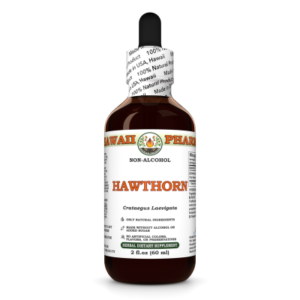
Our pick: hawthorn berry drops
Hawaii Pharm Hawthorn Berry Alcohol-Free Liquid Extract
An alcohol-free glycerite of hawthorn berry for people who want to try this traditional heart herb with their doctor's OK. Raw materials are identity-tested in Hawaii Pharm's own lab.
- Alcohol-free glycerite (vegetable glycerin and water)
- 2 fl oz dropper bottle, about 1 ml per serving
- Raw materials identity-tested in Hawaii Pharm's lab
Affiliate link: we may earn a commission at no extra cost to you. These statements have not been evaluated by the FDA. Not intended to diagnose, treat, cure, or prevent any disease. Full disclosure.
How to take hawthorn sensibly
- Talk to your doctor first if you take any prescription medication, especially for your heart or blood pressure.
- Check your numbers. If you are using hawthorn for blood pressure, measure it at home before you start and again after eight weeks, so you know whether it is doing anything.
- Be consistent. Take it daily at the same time rather than now and then.
- Choose a tested product that names the species and plant part, and identity-tests its raw materials.
- Keep the basics first. Hawthorn is an extra, not a replacement for movement, a heart-healthy diet and the treatment your doctor recommends.
Who should be careful
This section matters more than usual, because hawthorn acts on the heart and blood vessels.
- Anyone with a heart condition (heart failure, arrhythmia, angina or a past heart attack) must talk to their cardiologist before taking hawthorn.
- People taking digoxin, as hawthorn may add to its effects.
- People on blood pressure medication (beta-blockers, calcium channel blockers, ACE inhibitors) or nitrates, because effects may add up and blood pressure could drop too far.
- People taking erectile dysfunction drugs such as sildenafil, for the same reason.
- Pregnant or breastfeeding women, as safety has not been established.
In trials, side effects were mild and uncommon: dizziness, nausea, headache or palpitations. Seek medical help right away for chest pain, fainting or a racing heartbeat.
The honest bottom line
Hawthorn is one of the best-studied herbs in the world, and the research is a good example of why big trials matter. Smaller studies suggested it helped people with heart failure exercise more and feel better, and it may slightly lower blood pressure. The largest trial found it did not reduce heart deaths or hospital stays. It is safe for most people, but it interacts with common heart medications. If you are healthy and want to include it in a heart-friendly lifestyle, it is a reasonable, gentle option. If you have any heart condition, it is a conversation for your cardiologist first.
Want to try hawthorn berry?
Hawaii Pharm Hawthorn Berry Alcohol-Free Liquid Extract: hawthorn berry in vegetable glycerin and water, with no alcohol. Check with your doctor first if you take any heart or blood pressure medication.
Affiliate link. We may earn a commission if you buy, at no extra cost to you. These statements have not been evaluated by the Food and Drug Administration. This product is not intended to diagnose, treat, cure, or prevent any disease.
Frequently asked questions
Is hawthorn berry the same as leaf and flower extract?
They come from the same plant and share many compounds, but most modern trials used standardized leaf and flower extracts. Berry preparations are the traditional form and contain similar flavonoids and OPCs in different amounts.
Can hawthorn replace my blood pressure medication?
No. Its effect on blood pressure is small. Never stop or reduce a prescribed medication without talking to your doctor.
How long does hawthorn take to work?
Trials typically measured changes after 6 to 16 weeks of daily use. It is not a quick-acting remedy.
Studies and sources
- Pittler MH, Guo R, Ernst E (2008). Hawthorn extract for treating chronic heart failure. Cochrane Database of Systematic Reviews, via PubMed.
- Holubarsch CJ et al. (2008). The efficacy and safety of Crataegus extract WS 1442 in patients with heart failure: the SPICE trial. European Journal of Heart Failure, via PubMed.
- Zick SM et al. (2009). Hawthorn Extract Randomized Blinded Chronic Heart Failure (HERB CHF) trial. European Journal of Heart Failure, via PubMed.
- Walker AF et al. (2006). Hypotensive effects of hawthorn for patients with diabetes taking prescription drugs: a randomised controlled trial. British Journal of General Practice, via PubMed.
- National Center for Complementary and Integrative Health. Hawthorn. NCCIH.
- Hawaii Pharm Hawthorn Berry alcohol-free extract product page. Hawaii Pharm.
This article is for general education and is not medical advice. Talk to your doctor or pharmacist before starting a supplement, especially if you take medication, are pregnant or breastfeeding, or have a health condition. These statements have not been evaluated by the Food and Drug Administration. This product is not intended to diagnose, treat, cure, or prevent any disease.


