

A smart ring is the closest thing to a sleep lab you can wear to dinner. It sits on your finger, tracks your heart rate, heart rate variability, skin temperature and movement all night, and greets you in the morning with a score that tells you how well you recovered. No bulky watch, no screen glowing on your wrist at 2 a.m.
But how accurate are they, really, and can a ring actually help you sleep better? We looked at the validation studies against clinical sleep tests, the subscription costs nobody mentions up front, and the three rings we think are worth buying right now.
Smart rings at a glance: how good is the data?
- 😴 Total sleep timeGood agreement with lab sleep tests
- 🌙 Sleep stages (light, deep, REM)Fair: right about three nights in four, not clinical grade
- ❤️ Resting heart rate and HRV at nightGood, when the ring fits well
- 🌡️ Skin temperature trendsUseful for spotting illness and cycle changes
- 🩺 Diagnosing sleep disordersNo: see a doctor and get a proper sleep study
📊 How accurate are smart rings?
Sleep researchers test wearables against polysomnography, the overnight lab test that measures brain waves, eye movement and muscle activity. In a 2021 study in the journal Sleep, researchers compared seven consumer sleep trackers, including an Oura ring, with polysomnography. Most devices did well at telling sleep from wake and estimating total sleep time, and were weaker at telling the sleep stages apart.
Rings have improved since. A 2024 study of the Oura Ring Generation 3 with its updated sleep algorithm, tested over multiple nights against home polysomnography, found it agreed with the clinical test on sleep stages roughly three-quarters of the time and estimated total sleep well. That is impressive for a ring, and good enough to spot trends. It is not good enough to diagnose anything.
Our read: trust the trends more than any single night. If your ring says your deep sleep dropped for a week while your resting heart rate climbed, that is a real signal worth paying attention to. A single “bad” score is not.
💡 What a ring can actually do for your health
- Show you your sleep debt. Most people overestimate how much they sleep. Seeing 6 hours 10 minutes, night after night, is often the push to fix your bedtime.
- Connect habits to recovery. Late alcohol, heavy late dinners and evening workouts often show up as a higher resting heart rate and lower HRV that night. Seeing it in your own data is surprisingly motivating.
- Flag illness early. A rise in skin temperature and resting heart rate can show up a day or two before you feel sick.
- Track your cycle. Temperature trends can show where you are in your menstrual cycle. Oura data can feed into Natural Cycles, an FDA-cleared birth control app.
- Keep you moving. Step counts and activity goals, without wearing a watch.
⚠️ The catch: orthosomnia
Sleep researchers coined the term orthosomnia for people who become so focused on perfecting their sleep scores that the anxiety itself makes their sleep worse. If checking your score stresses you out, turn the score off for a while or only look at weekly trends. And if you snore loudly, stop breathing at night, or wake up exhausted despite enough hours, do not rely on a ring. Ask your doctor about a sleep study, because sleep apnea is common, serious and very treatable.
💳 Do not forget the subscription
This is the biggest difference between rings. Oura requires a membership after the first month to see most of your insights. Samsung Galaxy Ring and RingConn have no subscription for their standard features. Over three years, that difference can be more than $200, so factor it into the real price.
🏆 The 3 smart rings we would buy
| Ring | Battery | Subscription | Works with | Best for |
|---|---|---|---|---|
| Oura Ring 5 | 6 to 9 days | $5.99/month after month one | iPhone and Android | The most polished app and insights |
| Samsung Galaxy Ring | Up to 7 days | None | Android only | Samsung and Android users |
| RingConn Gen 2 Air | Up to 10 days | None for standard features | iPhone and Android | Best value, longest battery |
1. Best overall: Oura Ring 5
Oura has the longest research track record of any smart ring, and its app is still the best at turning numbers into plain-English advice about sleep, readiness and stress. Ring 5 is its smallest yet: all titanium, about 40% smaller than the previous generation, with 6 to 9 days of battery and integrations with more than 40 apps including Natural Cycles and Strava. The membership is the downside. If you want the most polished experience and will use the insights, this is the ring.
Best overall smart ring
The smallest Oura yet, in all-titanium, with sleep, readiness, temperature and cycle insights. Membership required after the first month.
- 6 to 9 days of battery
- Integrates with Natural Cycles, Strava and 40+ apps
- $5.99/month membership after month one
Affiliate link: we may earn a commission at no extra cost to you. As an Amazon Associate we earn from qualifying purchases. Full disclosure.
2. Best for Android: Samsung Galaxy Ring
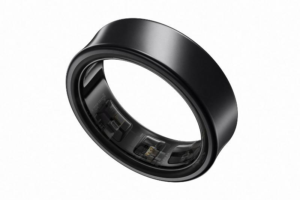
If you have an Android phone, especially a Samsung Galaxy, the Galaxy Ring is the easy choice. It is a comfortable titanium ring with solid sleep and fitness tracking, it plugs into Samsung Health, and there is no subscription. It does not work with iPhone. It is also FSA and HSA eligible, which can effectively knock a chunk off the price.
Best for Android
A titanium smart ring with sleep and fitness tracking and no subscription. Android phones only.
- No subscription
- Up to 7 days of battery
- Android only; FSA/HSA eligible
Affiliate link: we may earn a commission at no extra cost to you. As an Amazon Associate we earn from qualifying purchases. Full disclosure. Image: Samsung (official press image).
3. Best value: RingConn Gen 2 Air
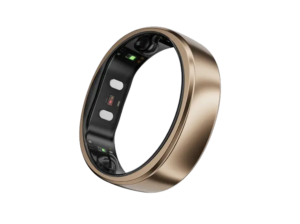
RingConn gives you sleep, heart rate, blood oxygen, stress and cycle tracking for about half the price of the big names, with no subscription and up to 10 days of battery. At 2 mm thin and 2.5 g, it is also one of the lightest rings you can buy. The app is less polished than Oura’s, but for most people who want reliable sleep trends without a monthly fee, it is the smart buy.
Best value smart ring
A thin, light smart ring with sleep, heart rate, SpO2 and cycle tracking, no subscription and up to 10 days of battery.
- No subscription for standard features
- Up to 10 days of battery
- 2 mm thin, 2.5 g
Affiliate link: we may earn a commission at no extra cost to you. As an Amazon Associate we earn from qualifying purchases. Full disclosure. Image: RingConn (official product image).
📏 Size it first
Smart rings use their own sizing, which is different from jewelry sizes, and a loose ring gives bad data. Every brand sells or includes a sizing kit. Wear the sample ring for a full day and night on the finger you plan to use, usually the index finger, before ordering your size.
🛏️ Use your ring to actually sleep better
- Pick one habit at a time to test: a fixed wake-up time, no caffeine after noon, or no alcohol within three hours of bed. Give each two weeks and watch your trends.
- Protect a consistent schedule. Regular sleep and wake times are one of the most powerful levers for sleep quality.
- Keep the bedroom cool, dark and quiet. Your temperature data often shows restless nights in a warm room.
- Look at weekly averages, not single nights.
- Pair it with the basics. Our magnesium for sleep and chamomile guides cover gentle, evidence-checked sleep support.
The honest bottom line
Smart rings are the most comfortable way to track your sleep, and they are accurate enough to show meaningful trends in sleep time, resting heart rate, HRV and temperature. They are not medical devices for diagnosing sleep problems, and they only help if you act on what they show you. Oura Ring 5 is the most polished pick, Samsung Galaxy Ring is the no-subscription choice for Android, and RingConn Gen 2 Air is the best value for everyone else.
Our top pick
Oura Ring 5: the smallest, most refined Oura yet, with the best sleep and recovery insights of any ring. Use the sizing kit first.
Affiliate link. As an Amazon Associate we earn from qualifying purchases, at no extra cost to you. Price and availability are set by the retailer and can change.
Frequently asked questions
Is a smart ring better than a smartwatch for sleep?
For sleep, many people find a ring more comfortable to wear all night, and finger-based sensors can give clean heart rate readings. A watch is better if you want a screen, notifications and GPS workouts.
Can a smart ring detect sleep apnea?
Some rings show blood oxygen dips or breathing disturbances, which can be a hint, but they cannot diagnose sleep apnea. If you snore loudly or wake up exhausted, ask your doctor about a sleep study.
Are smart rings safe to wear all the time?
Yes for most people. They use low-power sensors and Bluetooth. Take the ring off if your finger swells, and avoid lifting heavy weights with a titanium ring on if it could get scratched or pinch.
Studies and sources
- Chinoy ED et al. (2021). Performance of seven consumer sleep-tracking devices compared with polysomnography. Sleep, via PubMed.
- Svensson T et al. (2024). Validity and reliability of the Oura Ring Generation 3 (Gen3) with Oura sleep staging algorithm 2.0 (OSSA 2.0) when compared to multi-night ambulatory polysomnography. Sleep Medicine, via PubMed.
- de Zambotti M et al. (2019). The sleep of the ring: comparison of the OURA sleep tracker against polysomnography. Behavioral Sleep Medicine, via PubMed.
- Baron KG et al. (2017). Orthosomnia: are some patients taking the quantified self too far? Journal of Clinical Sleep Medicine, via PubMed.
- Oura Ring 5 listing. Amazon.
This article is for general education and is not medical advice. Talk to your doctor before using a health device to manage a medical condition.


